
Basic Operations
Diagram Display Operations
Refer to Fusion Editor UI for an overview of the basic operations associated with the diagrams displayed in Fusion.
Diagram Bird's Eye
The Diagram Bird's Eye panel is a separate panel that provides a comprehensive overview of the entire Fusion diagram. It also highlights the section currently visible in Fusion panel, making it particularly useful when working with large diagrams.
To open this panel from the menu, navigate to View > Fusion > Diagram Bird's Eye.
A complete documentation is available in Diagram Bird's Eye.
Adding a Fusion Node
New Fusion nodes can be added to any existing Fusion node that has a connector on its right side. All Fusion nodes are interconnected through links.
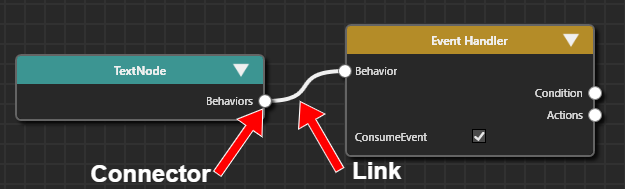
To add a new Fusion node, follow the steps below:
- Drag the Fusion node's connector to the right and hold the mouse button
- While dragging, a link will appear, following the mouse movement.
- Release the mouse button at any position.
- The Select Behavior dialog opens, displaying a list of available behaviors.
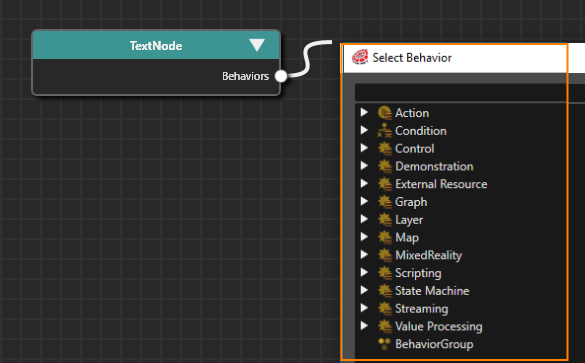
- The Select Behavior dialog opens, displaying a list of available behaviors.
- Click into the input field at the top of the dialog and start typing the name of the desired behavior.
- As you type, the list will be filtered to help you locate the behavior more easily.
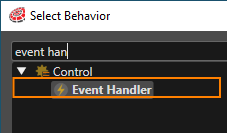
- As you type, the list will be filtered to help you locate the behavior more easily.
- When you find the desired behavior double-click it to select.
- A new Fusion node will be created and linked to the Fusion node whose connector you dragged in step 1.
Alternatively, you can browse through the list of behaviors without using the input field. The behaviors are organized in the same way as they appear in the toolbox.
Collapsing and Expanding a Fusion Node
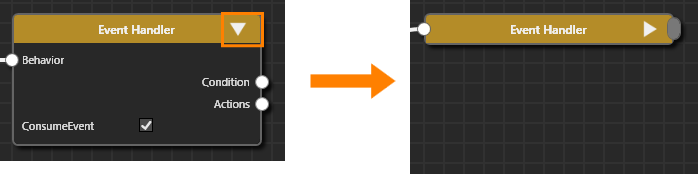
Each Fusion Node has an expand/collapse button located in the upper-right corner. Clicking this button toggles the node between expanded and collapsed.
Reference Fusion Node
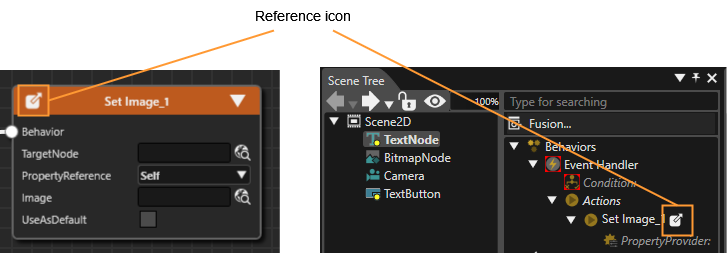
You can create a reference to behaviors available in the solution. For more information about this operation, see Behaviors: Deep Copy/Paste Operation. A reference icon appears in the top-left corner of the Fusion node that corresponding to that reference behavior. This icon is identical to the one displayed for the behavior in the Extra Scene tree. Click the reference icon to navigate directly to the referenced Fusion node.
Fusion Group (Behavior Group)
Fusion Nodes can be grouped together into a Fusion Group, providing an effective way to optimize and simplify the management and organization of Fusion diagrams. Groups can be renamed as desired or duplicated for reuse. Unlike a Behavior Building Block, creating a Fusion Group is faster and doesn't require template creation.
Creating a Fusion Group
- Select the target Fusion nodes
- Open the the context menu and choose [Create Group].
Navigating Fusion Groups
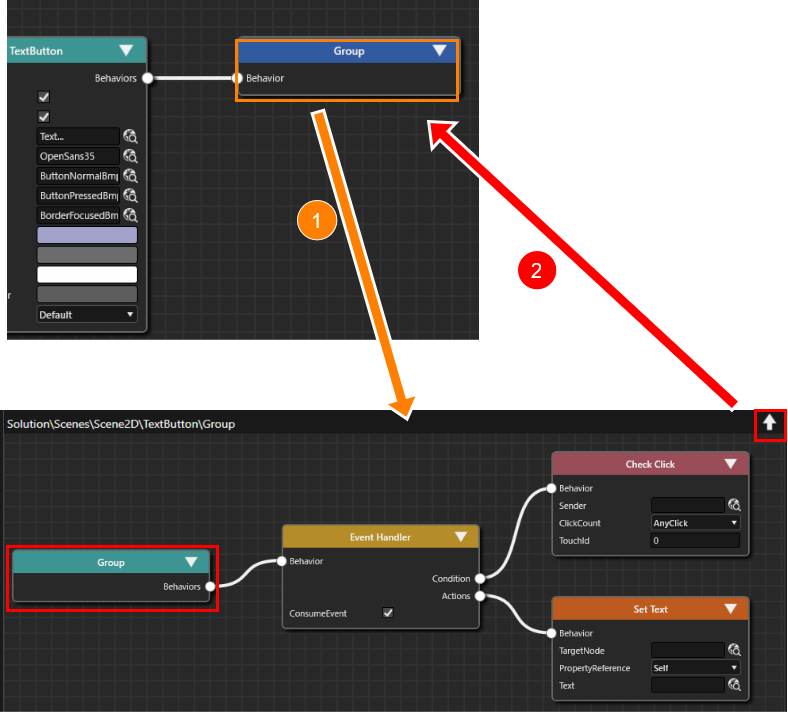
- Double-click the created Fusion Group to display a diagram of the grouped Fusion nodes.
- To return to the previous diagram level, either
- Click the arrow in the upper-right corner of the Fusion Group diagram or
- Double-click the top node in the group
MovingSelecting Multiple Fusion Nodes
DragYou acan Fusion node to move it to any location in Fusion panel. Ifselect multiple fusion nodes are selected byusing either of the following operations, all Fusion nodes will be moved.methods:
Ctrl-clickCtrl + Click each Fusion node toselectaddmultipleitfusiontonodes.
the selectionSelectRectangularmultipleSelection:FusionClick and hold the left mouse button, then drag to draw a rectangle around the nodeswithyouawantrectangulartoselection after dragging with a mouse left button.select.
Moving Fusion Nodes
To move a selection of Fusion nodes, drag them to the desired location within the Fusion panel. This applies to both a single node and multiple selected nodes.
Copy and Paste a Fusion Node
ATo Selectedcopy Nodeand canpaste bea copiedselection byof pressingFusion nodes, use the following keyboard shortcuts:
This works for both single nodes and multiple selected nodes.
Delete a Fusion Node
TheYou can delete operationa canFusion benode executedusing byone selectingof the following methods:
The deletion flow after the deletion operation is executedprocess depends on the status ofwhether the target Fusion node.
1. performingTarget Fusion Node is a Leaf Node
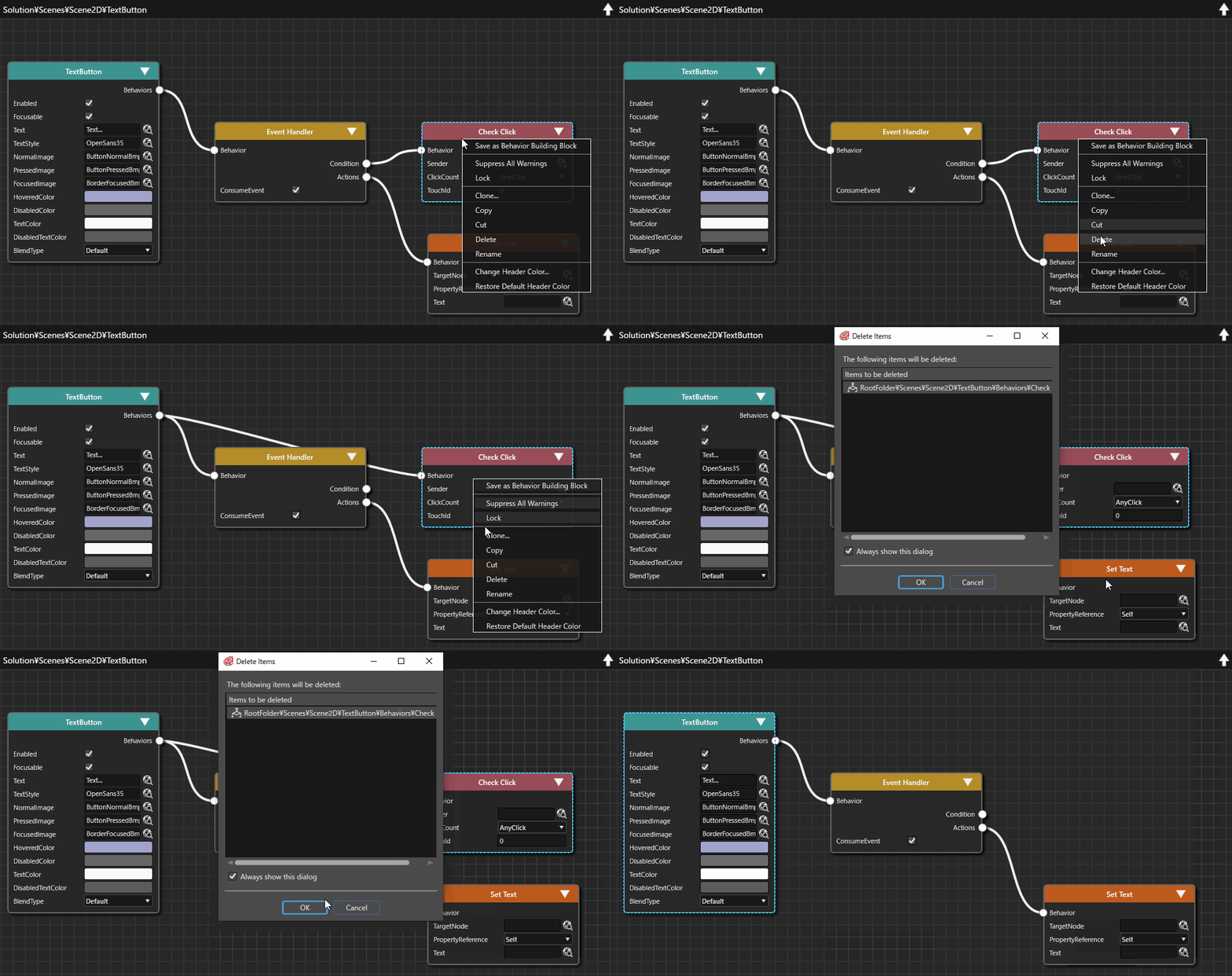
2. Target Fusion Node has Children
deletion.
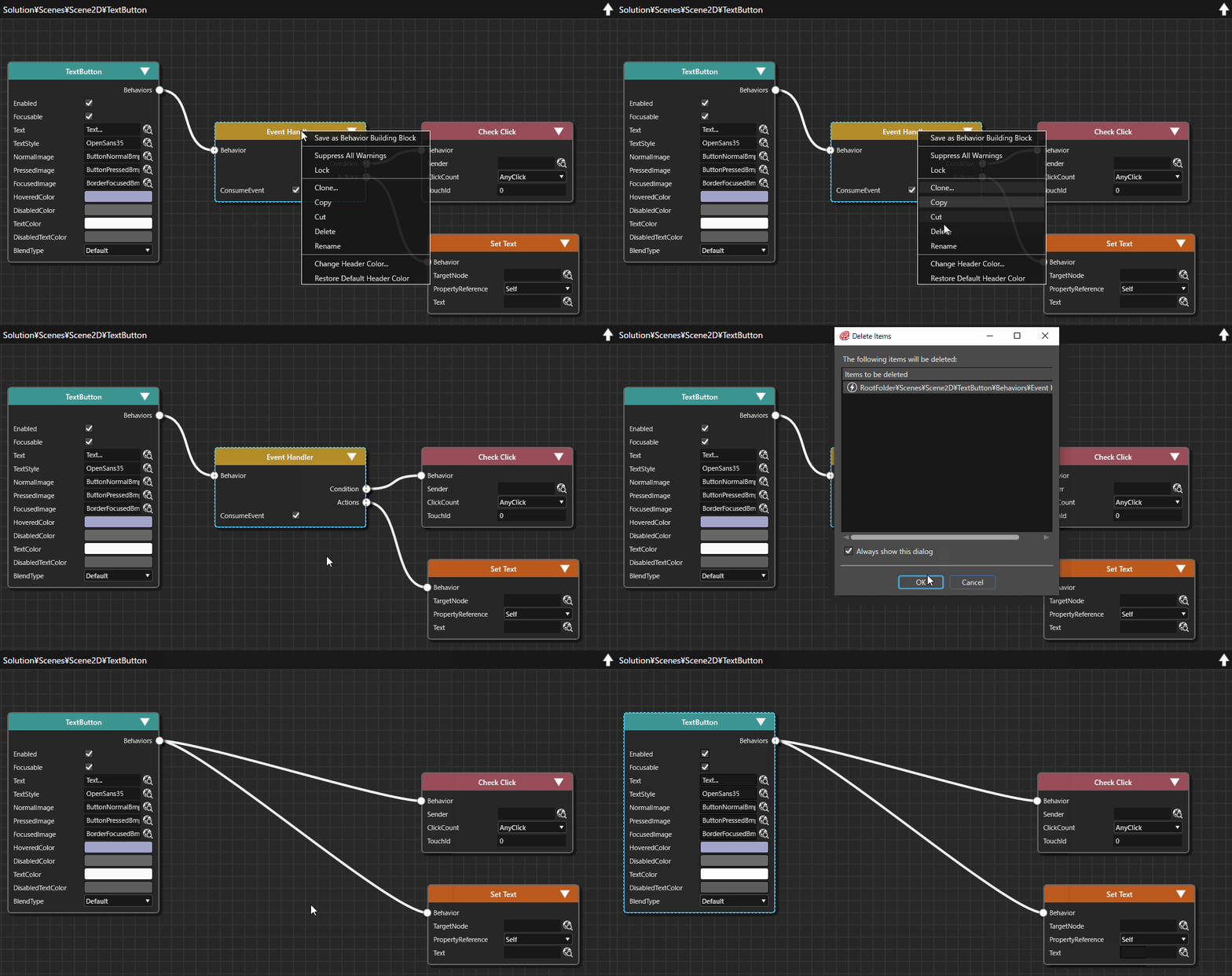
Connect via Link
If a connection between Fusion nodes are enabled, you can drag a connector to connect a link to another Fusion node.
Delete Link
By right-clicking on a connector of Fusion node, delete a link already connected (However, a link ofchild Fusion nodes connected to the toptarget node cannot be deleted.) If a connector is connected to multiple links, all links will be deleted.automatically reconnected to the top node.
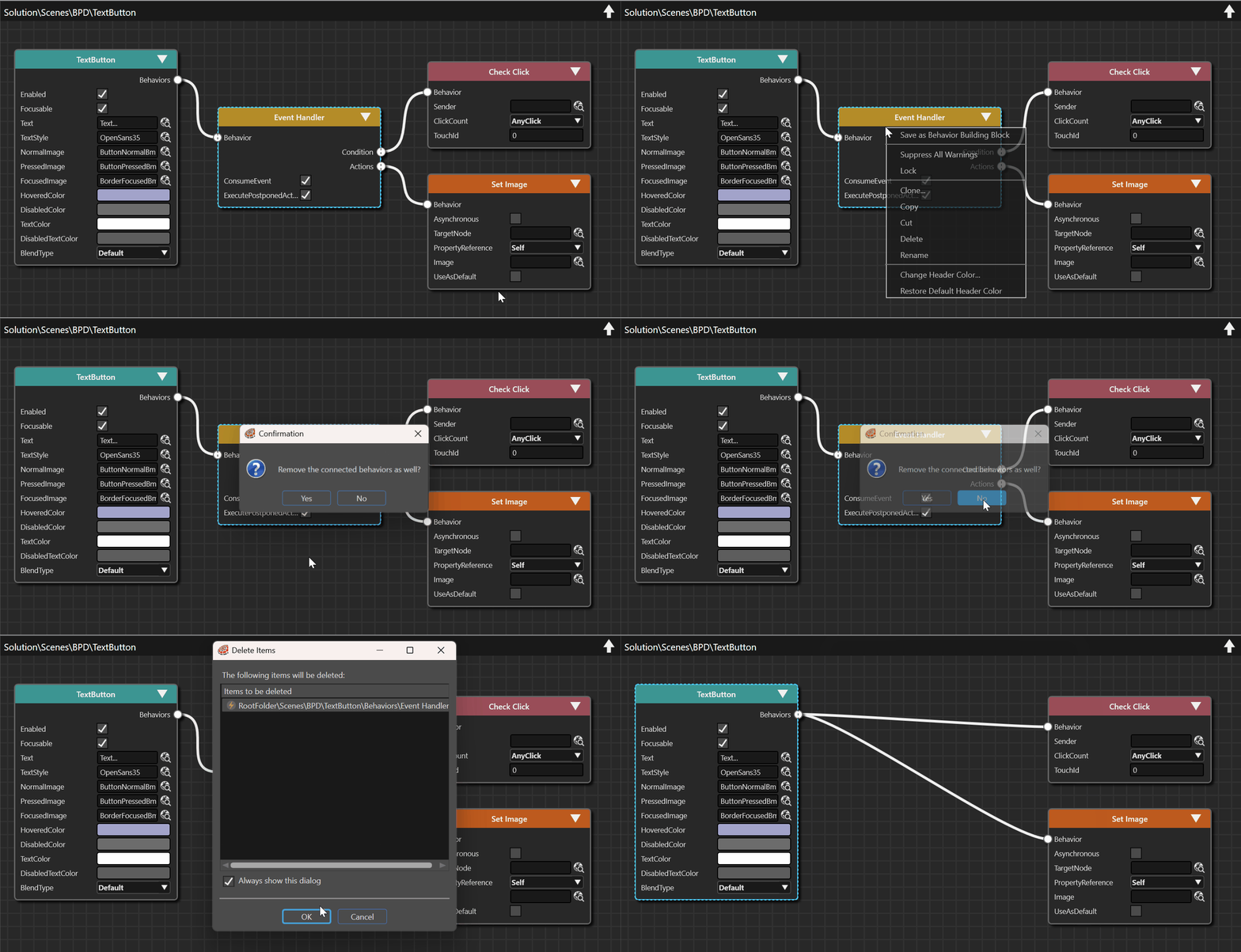
Re-Structuring the Nodes in a Fusion Diagram
The Top Node is the only node that can remain in a Fusion diagram without a link, provided he is the sole node in the diagram. All other Fusion nodes must be connected via a link. Deleting the link directly is not possible.
Re-Link a Connected Node to the Diagram's Top Node
Any Fusion node thatcan deletesbe itsre-linked to the Fusion diagram's top node using one of the following methods:
Change the Node a Fusion Node is Linked To
To link an already connected node to another node click the right connector of the node you want to connect from and drag a link to the node that should be connected.
Undo/Redo operation
Undo/Redo operationsYou can beperform performedUndo byand usingRedo actions in two ways:
Context Menu
After selecting anya Fusion node,node, right-click to display the context menu with the following context menu is displayed by right-clicking the mouse.operations:
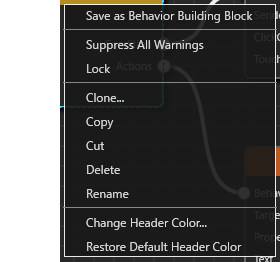
| Save as Behavior Building Block |
|
| Suppress All Warning |
Hides behavior-related warnings in Problems Browser panel. |
| Create Group |
This option appears when multiple Fusion nodes are selected. |
| Lock |
Note that locking the top node will lock all connected Fusion nodes. |
| Unlock |
Unlocks the currently selected Fusion node. This |
| Force Unlock |
Force all locks to be released. This |
|
Clone |
|
| Copy | |
| Cut |
|
| Delete |
Performs a delete operation on a selected Fusion node. |
| Paste |
This option appears after performing a Copy or Cut operation. |
| Rename |
|
| Change Header Color | |
| Restore Default Header Color |
Double Click operation
Double-clicking on a Fusion node switcheschanges the display screen.as follows:
IfState Machine Element
-> Opens thetop node is a state machine element, display itsState Machine Editorscreen.screen for the selected elementIf you click onBehaviorBuildingBlockBuildingFusionBlocknode,Node
-> Displays the Fusion diagram of the target Behavior BuildingBlock'stemplate is displayed.template.IfBehavioryouGroupdouble-click
->onShowsathebehavior group, itsinternal structurewillofbethedisplayed.group